News

How to Verify the Quality of Electric Retractable Awnings for Peace of Mind? A Comprehensive Guide to Factory Inspection and On-Site Acceptance

2026-10-12 0 Leave me a message

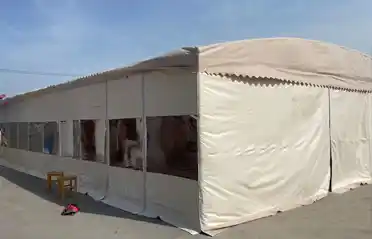
With the rapidly growing demand for outdoor space upgrades, **electric retractable awnings** have evolved from simple sun-shading tools into essential outdoor facilities for industrial warehousing, commercial outdoor seating areas, and residential balconies. How can one determine if an awning can withstand years of exposure to wind and sun? The answer lies not in marketing slogans, but in the specific details of factory inspections and on-site acceptance checks. As an enterprise integrating design, development, manufacturing, and sales, Tangshan Pengcheng Outdoor Products Co., Ltd. has deep industry roots. With major production bases in Tangshan and Xi'an, our products are widely used across domestic industrial, commercial, and residential sectors and are consistently exported overseas. Drawing on current national standards and extensive manufacturing experience, we have compiled a set of quality inspection methods that buyers can use as a direct reference.

I. Why Is Inspection Essential? — Materials and Structure Determine Service Life

The core costs of outdoor products are often hidden in the unseen "inner components." Take electric retractable awnings, for example; their lifespan depends primarily on the materials used for the aluminum alloy framework, the awning fabric, and the hardware fittings. Relevant domestic inspection standards include GB/T 33272 (*Fabrics for Awnings and Camping Tents*), the group standard T/ZZB 1981—2020 (*Intelligent Folding-Arm Awnings for Buildings*), and the standard GB/T 42692 (*Shading Awnings*). Inspections should focus particularly on the framework's anti-rust/corrosion resistance and weld quality. A compliant full weld requires continuity and uniform bead height, with no missed welds or "cold welds" (incomplete fusion); conversely, structures relying solely on single-point or intermittent spot welding are highly prone to failure under long-term stress. This is precisely why many manufacturers seek patents for anti-rust and corrosion-resistant technologies in their awning products.

II. Factory Inspection: The "Three Gatekeepers" — Materials, Structure, and Operational Performance

Reputable manufacturers conduct item-by-item inspections in accordance with standards before products leave the factory. Factory inspection protocols for retractable awnings typically cover five key areas: appearance, product completeness, dimensions, opening/closing functionality, and stitching quality. When evaluating the testing system, the purchaser should focus on three specific points: first, whether the aluminum profile wall thickness and surface finish (anodizing or powder coating) meet standards; second, whether there is verified test data regarding the awning fabric's tensile strength (warp and weft) and water permeability; and third, whether the opening/closing mechanism—specifically the guide rails and hinges—operates smoothly even after repeated extension and retraction. A formal certificate of conformity and a verifiable test record are far more convincing than a mere verbal assurance of "good quality."

III. Electrical System Testing: Motors, Emergency Stops, and Power-Loss Contingencies

The primary risks associated with the unit lie in its electrical components; therefore, testing must be conducted across three levels. First, the tubular motor must respond promptly to start/stop commands from remote controls and buttons, the control box must meet ingress protection standards, and there must be no exposed wiring. Second, the emergency stop function must be reliable, halting all movement immediately upon activation—a critical safety requirement. Third, a manual emergency release mechanism for use during power outages is essential to ensure the awning can be retracted or extended manually, preventing entrapment during extreme weather. Additionally, parameters such as full-load operating noise (typically required to be no higher than 65 decibels at a distance of one meter from the unit), dielectric strength, and grounding resistance should be verified prior to delivery.

IV. On-Site Acceptance: Five Checks the Purchaser Can Perform After Installation

Quality verification should not end at the factory. Once installation is complete, the purchaser can perform five simple on-site checks: first, repeatedly open and close the awning to ensure smooth operation without sticking or abnormal noises; second, test the emergency stop and power-loss contingency functions; third, simulate rainfall or splash water on the unit to check for leaks at seams or drainage channels and to ensure no significant water pooling occurs; fourth, inspect all mounting and load-bearing points to ensure they are secure; and fifth, verify that the limit positions for extension and retraction are accurate and comply with contractual specifications. These checks require no specialized equipment, yet they serve as the most direct methods for identifying issues such as inflated specifications or the use of substandard materials.

V. How to Select a Reliable Electric Retractable Awning? — Prioritize Qualifications and End-to-End Quality Control

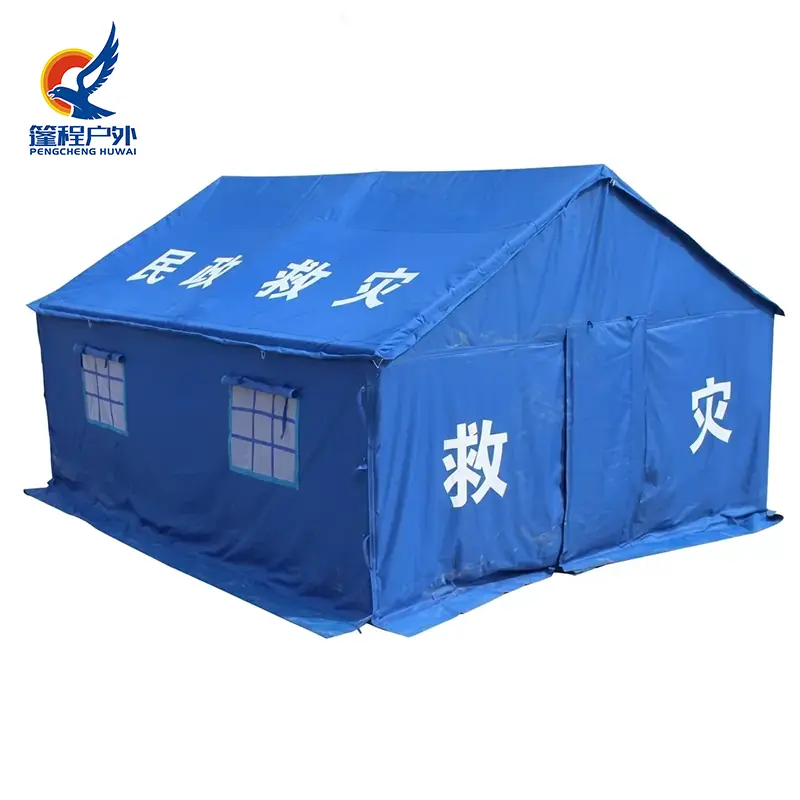
When selecting a supplier, it is advisable to focus on three key aspects: whether they hold recognized credentials (such as "National High-Tech Enterprise" or "Specialized, Refined, Unique, and Innovative" status); whether they possess relevant patents for materials and structural design; and whether they provide comprehensive quality control covering the entire process—from design and manufacturing to installation and after-sales service. Take Tangshan Pengcheng Outdoor Products Co., Ltd. as an example: leveraging two major production bases and complete production lines, the company handles custom orders ranging from electric retractable awnings to large-scale marquee tents and has supplied products in bulk to organizations such as the Red Cross and the Ministry of Civil Affairs. Such publicly verifiable project records serve as tangible proof of credibility. When signing a contract, ensure that testing items, acceptance criteria, and after-sales terms are explicitly included.

In summary, assessing the quality of electric retractable awnings need not be overly complex. By focusing on three critical areas—materials and structure, electrical safety, and on-site acceptance—and cross-verifying supplier qualifications, you can largely avoid common pitfalls. Investing effort in the inspection process ensures that every outdoor installation can truly withstand the test of time and weather.

Related News
Leave me a message
X
We use cookies to offer you a better browsing experience, analyze site traffic and personalize content. By using this site, you agree to our use of cookies. Privacy Policy
RejectAccept