How long can disaster relief tents be used? Are the claims of 2 years, 6 years, and 10 years true?

2026-09-02 0 Leave me a message


Most people who purchase disaster relief tents have asked the same question: How long can these tents actually be used? Different people give different answers. Some, citing the Ministry of Civil Affairs' industry standard, say they can be used continuously for more than 2 years; warehouse managers will say they need to be rotated after 6 years of storage; others mention that command tents can be stored for 10 years. All three figures are correct because they refer to completely different things.

The MZ/T 011 industry standard for "Disaster Relief Tents" clearly states that a single tent can be used continuously for more than 2 years under normal conditions. This refers to the actual time used. However, relevant departments in various regions refer to the "Recommended Standards for the Storage Life of Central Emergency Disaster Relief Supplies" for their reserves. The storage life for frame-type single tents and cotton tents is 6 years, and for a 60-square-meter mesh-frame command tent, it is 10 years. This lifespan refers to the time the tents remain in storage without deteriorating, which is different from how long they have been used. The purpose of rotating reserve tents is to ensure that every tent used in a disaster is in good condition, not that they are only meant to last six years.

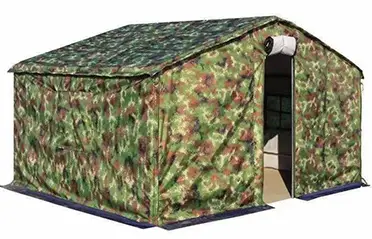
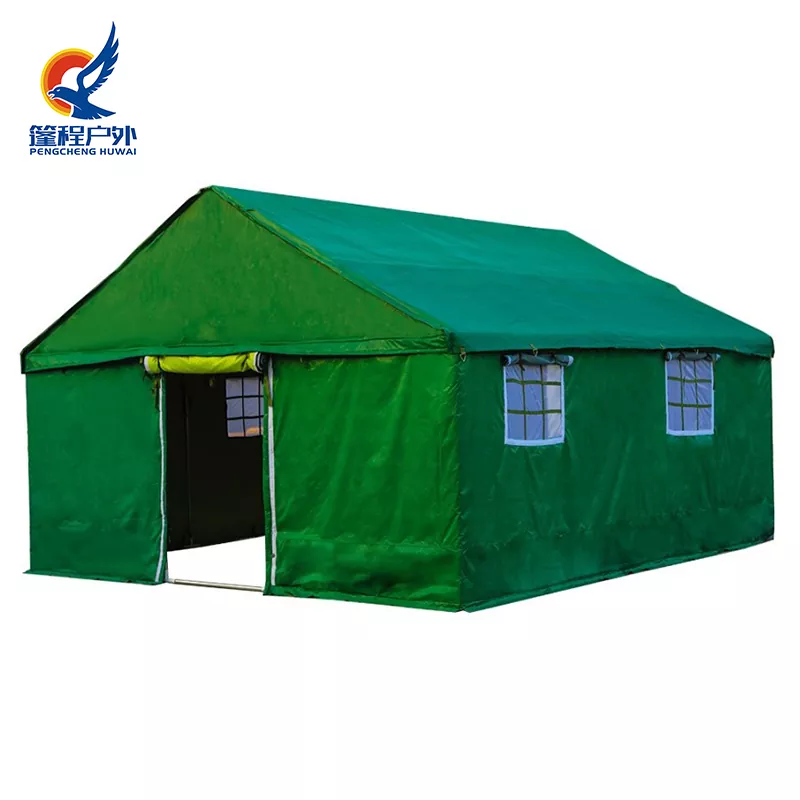
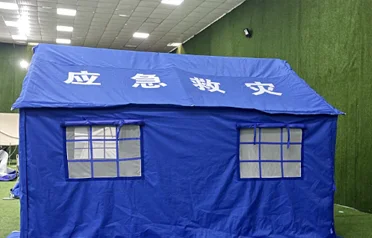
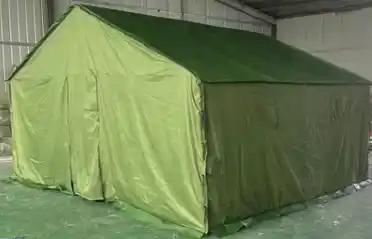
Disaster relief tents are mostly frame-type, with the tent body made of PVC waterproof Oxford cloth or coated fabric, and the frame made of welded steel pipes. The tent fabric has the shortest lifespan; even the coated fabric is considered for a six-year reserve period. It is susceptible to damage from direct sunlight and moisture; prolonged exposure to sunlight causes the coating to age and become brittle, while prolonged dampness leads to mold growth. The frame is relatively durable, but it is vulnerable to rusting from impacts to the welds and paint. Therefore, some regions stipulate that if the tent fabric is torn, a new tent fabric can be purchased and replaced, while the frame can still be used, often resulting in a longer actual lifespan than expected. Storage conditions are equally important. A well-ventilated, elevated, and moisture-free warehouse ensures the tents can be stored stably for a full reserve cycle. Tents used during the rainy season that are not dried before storage will have a strong odor when reopened the following year.

On November 1, 2024, the national standard "General Technical Requirements for Disaster Relief Tents" (GB/T 44010-2024) officially came into effect, unifying the waterproof, windproof, flame-retardant, and moisture-proof performance and inspection rules for frame-type disaster relief tents. When purchasing a tent, buyers should first check if it was manufactured according to this standard and if there are corresponding test reports; this is more reliable than relying on claims of its lifespan.

Tangshan Pengcheng Outdoor Products Co., Ltd. (brand "Pengcheng") is a tent manufacturer in Tangshan, Hebei Province, established in 2014. They produce disaster relief tents, cotton tents, and command tents, supplying domestic government procurement and exporting to Southeast Asia, Africa, the Middle East, and other regions. The factory's explanation is simple: there's no fixed answer to how many years a tent can last. The actual lifespan depends on the tent fabric, frame, storage conditions, and maintenance habits. With proper storage and timely replacement of the tent fabric, six or seven years is common. Whether or not to replace it depends on three things: whether the tent fabric is still waterproof, whether the frame has rust holes, and whether the ropes and stakes are all intact. If all three are in good condition, the tent can still be used.


Related News
Leave me a message
X
We use cookies to offer you a better browsing experience, analyze site traffic and personalize content. By using this site, you agree to our use of cookies.Privacy Policy