What are the common types of disaster relief tents? Tangshan Pengcheng Outdoor guides you through selecting the right model for different scenarios.

2026-08-17 0 Leave me a message


As essential supplies for temporary shelter, command operations, and medical aid, disaster relief tents play a crucial role in emergency response. Many purchasing agencies struggle to distinguish the appropriate use cases for different tent types when stocking up. Drawing on its manufacturing expertise, Tangshan Pengcheng Outdoor Co., Ltd. outlines the mainstream categories of disaster relief tents to assist with selection and procurement.

I. Single-layer Disaster Relief Tents: Basic Shelter for Warm Seasons

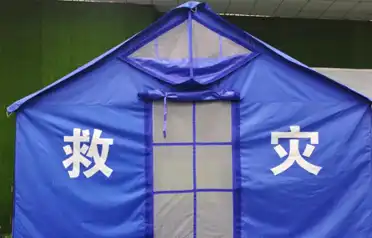
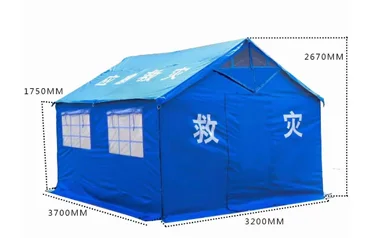
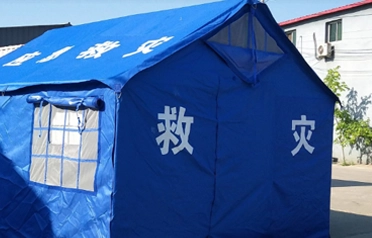
In accordance with the GB/T 44010-2024 standard for disaster relief tents, common specifications include 8m², 12m², 20m², and 36m² models. The tent body is made of PVC- or PU-coated waterproof Oxford fabric; lacking an insulating inner layer, it is designed to provide protection against rain, sun, and wind.

The 12m² model is the most widely used, accommodating 4–6 people for short-term stays. It features a steel-pipe frame that is easy to assemble and disassemble, making it convenient to pack and transport. Tangshan Pengcheng Outdoor’s single-layer tents are equipped with rain-shedding eaves and ventilation windows, making them suitable for housing personnel and storing supplies in warm environments, such as during flood seasons in the south.

II. Cold-resistant Cotton Tents: Shelter Options for Low-Temperature and Alpine Environments

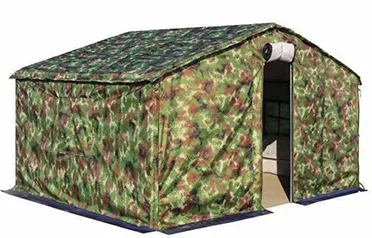
For disaster relief operations during autumn and winter or in high-altitude, cold regions, cotton tents with insulating liners are the preferred choice. These tents consist of a waterproof outer fly, an insulating inner liner, a steel frame, and accessories such as ground pegs and guy ropes. Some models feature a designated chimney opening, allowing for the use of heating equipment to ensure comfortable overnight stays in cold conditions.

Available in sizes ranging from 12m² to 36m², the larger cotton tents can also serve as temporary command centers. The fabric and insulation specifications of Tangshan Pengcheng Outdoor’s cold-resistant cotton tents can be customized to meet tender requirements, ensuring resilience against wind and snow.

 III. Specialized Tents Tailored to Specific Disaster Relief Tasks

Disaster relief camps require a variety of specialized tents to meet diverse operational needs:

Medical Tents: Feature spacious interiors and modular expandability; suitable for temporary consultations and medical supply storage.

Toilet and Shower Tents: Compact footprint and rapid assembly/disassembly; essential for improving living amenities at relief sites.

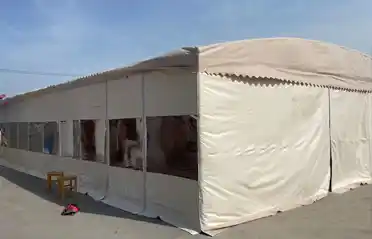
Command and Office Tents: Large-scale units (36–60 m²) serving as frontline command posts or supply sorting stations.

Inflatable Relief Tents: Require no steel framework and offer rapid deployment, making them ideal for emergency rescue operations; however, they require more maintenance than steel-frame models.

IV. Key Considerations for Purchasing Disaster Relief Tents

Procurement decisions should go beyond floor area and take the following factors into account:

Seasonal Use: Single-layer tents are preferable for warm, rainy regions, while cotton tents are better suited for cold areas.

Intended Use:Select dedicated housing tents for personnel accommodation, and large-capacity functional tents for office or medical operations.

Product Certification: For government procurement projects, verify testing reports to ensure compliance with national standards.

No single type of disaster relief tent is inherently superior; the key lies in matching the tent to the specific operational scenario. Tangshan Pengcheng Outdoor Co., Ltd. remains committed to the emergency tent sector, providing products tailored to local climate and terrain conditions to support the development of emergency supply reserves.

Related News
Leave me a message
X
We use cookies to offer you a better browsing experience, analyze site traffic and personalize content. By using this site, you agree to our use of cookies.Privacy Policy