News

How Are Disaster Relief Tents Packed, Loaded, and Shipped?

2026-09-18 0 Leave me a message

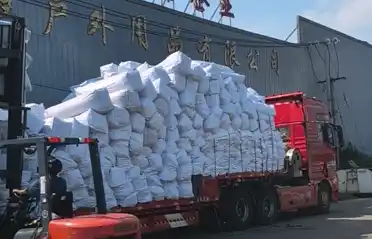
Recently, the loading area at Tangshan Pengcheng Outdoor Products Co., Ltd. has been bustling with activity. Forklifts shuttle back and forth as workers stack pallets of packed disaster relief tents onto high-sided trucks. Tarps are secured and ropes tightened; only after the driver verifies the packing list can the vehicle leave the factory gates. While it may look like a simple loading job, the process—from the moment the tents leave the production line to the vehicle's departure—involves a series of tightly linked steps. Given their critical purpose, disaster relief tents cannot afford delays; a mistake at any stage could cause serious problems once the shipment reaches the disaster zone.

Packing: The Final Step Before Leaving the Factory

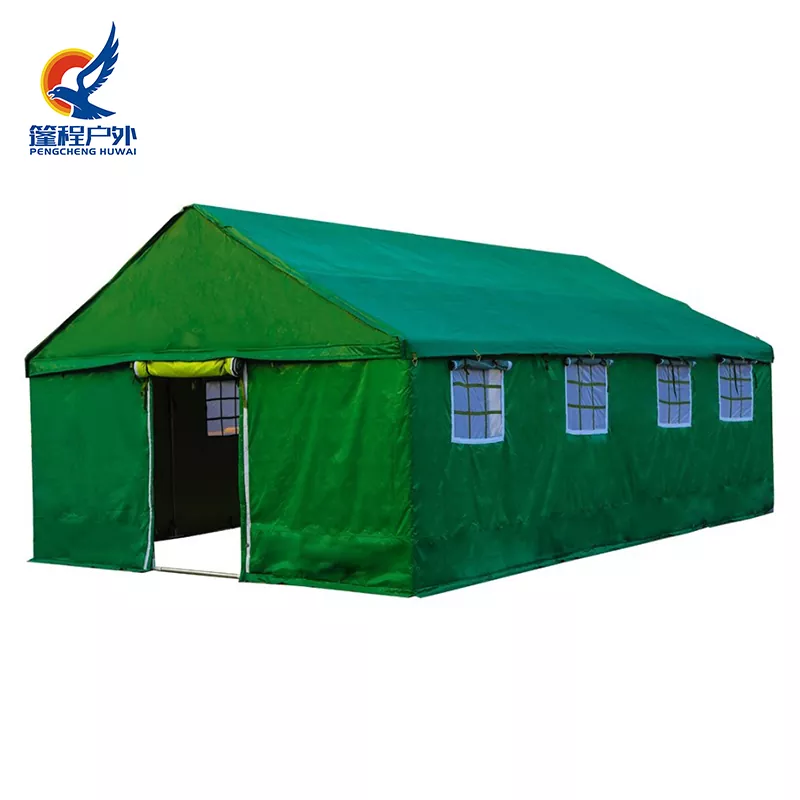
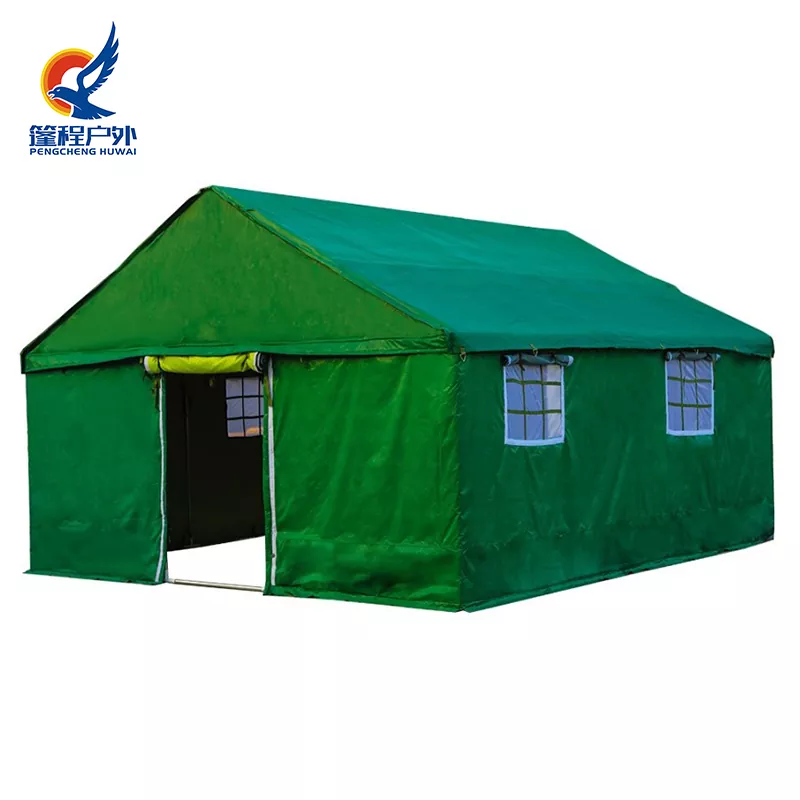
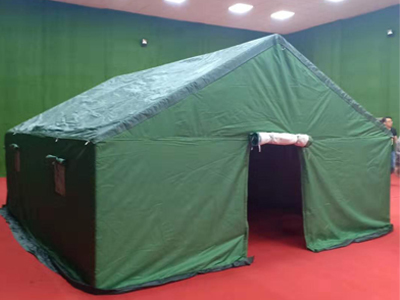
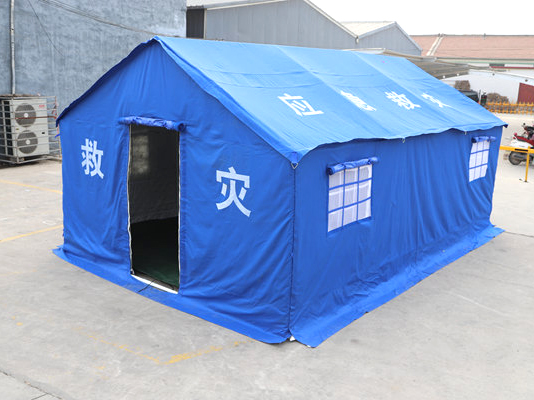
When tents emerge from the production workshop, their components are separate. Take a standard 12-square-meter disaster relief tent, for example: the fabric, poles, ground pegs, and carrying bags are stored separately. They must first be assembled into complete sets, then folded, compressed, and packed into waterproof woven bags. Compression saves space; a single truck can carry about 30% more cargo when the items are compressed and packed rather than loaded loosely. Before sealing, shipping labels are applied—detailing specifications, quantities, and batch numbers—which serve as the basis for subsequent inventory checks and reconciliation.

There is also a specific technique for stacking pallets. Woven bags cannot be placed directly on the ground; they must rest on pallets that allow for forklift access. Once stacked to a certain height, the load is wrapped twice with stretch film and secured with two packing straps. This ensures the pallet remains stable during handling and provides temporary protection against rain during transit.

Loading: Fitting It In and Keeping It Stable

Loading may look simple, but it is essentially a calculation problem. Disaster relief tents are typically transported in high-sided trucks or box trucks with fixed cargo bed lengths. Decisions regarding whether to place pallets lengthwise or crosswise, and whether to stagger the stacking pattern between layers, directly determine the total capacity. Heavier items are loaded first—poles and accessory boxes go at the bottom, with tent bags stacked on top. After loading each layer, workers tug at the edge of the pallet to ensure there is no slack; cardboard or air cushions are used to fill large gaps and prevent shifting during transport.

Securing the load is the final step—and the one drivers pay the most attention to. Straps must be applied both horizontally and vertically, and the buckles tightened securely; for high-sided trucks, tarpaulins must be used to cover the load, with the corners tied down firmly. No one signs off on the shipping manifest until the cargo is properly secured.

Shipping: Factoring in Routes and Timelines

Shipping involves more than just finding a truck. Before shipment, sales and logistics teams verify the cargo details—quantity, weight, volume, and destination—to determine the appropriate vehicle type. Domestic shipments go by road, though rail is considered for long distances; export shipments of disaster relief tents use containers, with customs documents, shipping marks, and packing lists prepared in advance. Pengcheng Outdoor is a long-term supplier for government procurement and tender projects and has handled emergency relief orders for Southeast Asia, Africa, and the Middle East. These orders demand strict adherence to schedules, with packing, loading, and shipping all managed according to a reverse-planned timeline.

Why the Packing and Loading Stage Deserves Special Mention

Disaster zones are waiting for these tents; if the shipment is delayed by even a day, people are left exposed to the rain for another day. Sturdy packaging and standardized loading ensure that tents arrive at their destination with every box accounted for and every tent intact—ready for immediate use upon unpacking. This is a fundamental competency for disaster relief tent manufacturers. The national standard GB/T 44010-2024, *General Technical Requirements for Disaster Relief Tents*, sets clear specifications for marking, packaging, storage, and transport; Pengcheng Outdoor’s shipping processes strictly adhere to this standard. Public data indicates a daily production capacity of approximately 5,000 tents; during peak order periods, the queue for packing and loading can stretch from the workshop all the way to the factory gate.

About Tangshan Pengcheng Outdoor Products Co., Ltd.

Located in Yutian County, Tangshan City, Hebei Province, the company is a National High-Tech Enterprise, a Science and Technology SME, and a Hebei Province "Specialized, Refined, Differential, and Innovative" (SRDI) SME. It operates a production and R&D base spanning over 15,000 square meters. Specializing in disaster relief tents, outdoor tents, and related products, the company serves government procurement, tender projects, and foreign trade clients, offering one-stop shipping services that include packing, loading, logistics, and customs clearance.

FAQ

What standards do disaster relief tents follow?

The current national standard is GB/T 44010-2024, "Disaster Relief Tents – General Technical Requirements," which specifies the classification, style, specifications, performance, marking, packaging, storage, and transportation of disaster relief tents.

How much does a packed disaster relief tent weigh?

Most models weigh around 20–30 kg after being compressed and packed; they can be carried by two people, making transport in disaster-stricken areas convenient.

How long does delivery usually take?

Road transport to most domestic regions typically takes 3–7 days, depending on distance and vehicle type; expedited arrangements can be made for urgent orders.

Can they be customized by size?

Yes. Specifications, printed content, and packaging methods can all be customized according to order requirements.

How are export orders shipped?

Shipping is primarily handled via containerized sea freight; we can assist with customs declaration and clearance procedures.


Related News
Leave me a message
X
We use cookies to offer you a better browsing experience, analyze site traffic and personalize content. By using this site, you agree to our use of cookies.Privacy Policy
RejectAccept