News

What Makes Disaster Relief Tents Warm Enough for Cold Winter Nights?

2026-11-05 0 Leave me a message

Tangshan Pengcheng Outdoor Supplies Co., Ltd.  |  Procurement & QC Team  |  5 November 2026

Winter earthquakes, high-altitude floods and post-monsoon cold spells all share one procurement mistake: ordering a warm-weather shelter spec for a cold-climate deployment. When buyers source disaster relief tents for sub-zero nights, wet wind or light snow load, the difference between a livable shelter and a dangerous one is written into the technical specification before the order is placed — not discovered on the ground.

Insulation Weight and Quilt Layout

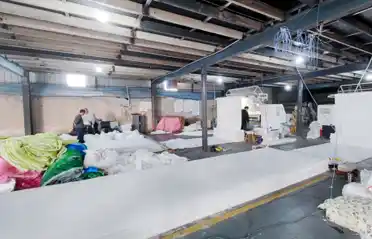
The single biggest spec a buyer controls is the insulation layer. Cold-climate disaster relief tents are built from a quilted sandwich: an outer waterproof shell, an insulating middle layer and an inner lining, stitched together so the fill does not shift. When requesting a quote, buyers should name a target insulation weight per square metre, state the lowest night temperature the shelter must hold, and ask whether the quilt pattern runs across or along the panel seams — across-panel quilting is more resistant to cold spots at the seams. In China, disaster relief tents are produced against GB/T 44010-2024, the national standard that covers thermal insulation, water resistance and seam strength; asking a supplier how a given spec maps to this standard is a quick way to separate experienced factories from resellers.

Figure 1. Quilting line at the Tangshan workshop that locks the insulating fill in place across the panel, photographed November 2026.

Outer Shell Fabric and Seam Treatment

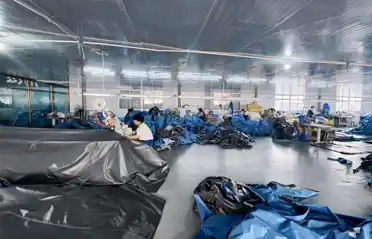
The outer shell faces wind-driven rain, UV and occasional light snow, so fabric weight and seam treatment matter more than colour. Buyers should ask for the fabric weight in grams per square metre, the coating type on the reverse, and whether the sewn seams on the outer shell are taped or left untreated. For high-humidity cold sites, taped seams are a worthwhile extra — untaped stitching will weep on the first wet night and frost over by morning.

Figure 2. Heavy-duty sewing of the outer shell fabric at the Tangshan workshop, before it is matched to the insulated inner layer, photographed November 2026.

Frame and Anchoring for Wind and Light Snow

Cold-climate sites often combine still, freezing nights with windy daytime gusts and a thin snow load on the roof. Buyers should specify: tube material and wall thickness for the frame, the expected snow load the roof structure is designed for, and whether the kit includes guy ropes, ground straps and enough anchor points for both soft soil and frozen ground. A frame that survives wind but not a light snow layer is a common failure mode buyers only discover after delivery.

Three Questions to Put in the RFQ


Before sending out a request for quotation, fold the three points above into three written questions so every supplier answers the same spec:

· What insulation weight per square metre is included, and what outside temperature was this layer tested against?

· Are the outer-shell seams taped or unsealed, and what is the fabric weight and coating?

· What frame material, wall thickness and anchor set come in the standard kit, and is the roof rated for light snow?

Comparing answers side by side is far more useful than comparing catalogue prices — two tents with the same floor area can deliver a very different inside temperature on the same cold night.

Next Step for Buyers

For agencies, distributors and project teams sourcing disaster relief tents for a cold-climate deployment, the fastest way to avoid a spec mismatch is to share the target night temperature and terrain early. Tangshan Pengcheng Outdoor Supplies Co., Ltd. can send a tailored spec sheet and fabric samples for the insulation layer and outer shell on request — tell the sales team the headcount, the lowest expected night temperature and the ground type, and the quotation will come back as a configuration rather than a generic price.


Related News
Leave me a message
X
We use cookies to offer you a better browsing experience, analyze site traffic and personalize content. By using this site, you agree to our use of cookies. Privacy Policy
RejectAccept