News

How is the fabric for a disaster-relief tent stitched together? A visit to the production floor at Pengcheng Outdoor Gear.

2026-11-13 0 Leave me a message

Workshop Floor: Quilted Tarpaulin Processing

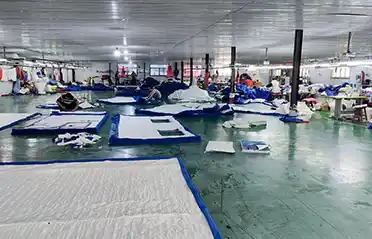
In the production workshop of Pengcheng Outdoor Products Co., Ltd., white quilted tarpaulins lie flat across a green epoxy floor, their edges neatly finished with blue binding. Workers crouch on either side, aligning and stitching the material—a standard procedure in the production of disaster-relief tent covers. The workshop features a corrugated metal ceiling, illuminated by rows of long, linear fluorescent lights, supplemented by natural light from side windows. Tarpaulins at various stages of production are distributed throughout the space: some have been quilted and await edge binding, while others, already fitted with blue trim, are undergoing the cutting of openings for doors and windows. Rolls of blue fabric and auxiliary materials are stacked along the walls, and a line of industrial sewing machines is arranged along the workbench on the right.

Technical Processes: The Structural Role of Quilting and Edge Binding

The quilted, grid-like pattern across the surface of the tarpaulin ensures that the layers remain bonded and minimizes the risk of bulging—a factor that directly influences the durability of disaster-relief tents in outdoor environments. The blue edge binding serves to seal the raw edges and prevent fraying; it also acts as a reinforced structural element, facilitating the connection between the outer fly and the inner tent, and strengthening areas subject to stress from ground pegs. The binding is stitched according to precise technical specifications, with stitch length and thread tension controlled by the operators on duty. Once stitched, the items undergo a thorough inspection to check for skipped stitches or loose threads. Openings for doors and windows are individually hemmed to prevent the edges from unraveling.

Production Organization: Order-Based Zonal Operations

Disaster-relief tents are primarily manufactured on an order-driven basis, with large batch sizes. The workshop is organized into distinct zones for cutting, quilting, edge binding, door and window aperture processing, accessory installation, and final folding and packaging. Multiple tarpaulins move through the production line simultaneously, allowing for the parallel manufacturing of tents in different batches and sizes. Team leaders verify fabric colors and accessory lists against specific order numbers to ensure accuracy. The workshop floor is kept clean—free of loose threads or oil stains—through daily maintenance, meeting the fire safety and dust-control standards required for textile sewing facilities. Product Categories and Clientele

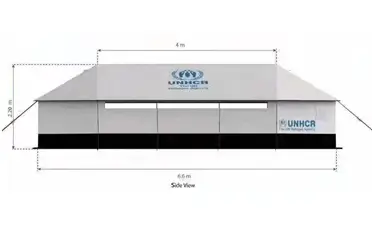
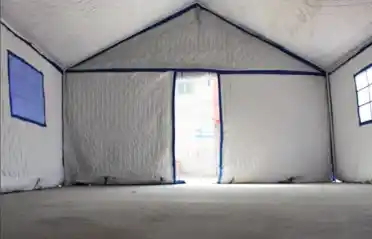
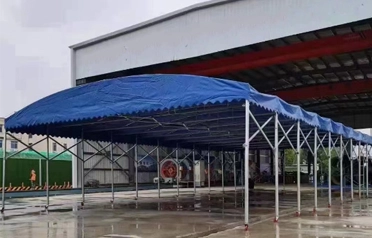
Pengcheng Outdoor Products Co., Ltd. offers a diverse product line, including disaster-relief tents, construction tents, camping tents, and various air-supported structures. This workshop is dedicated to the sewing and assembly of canvas (cotton) tents and insulated tents, which are utilized for emergency shelter, on-site accommodation for construction projects, and outdoor operations in low-temperature environments. International clients, project procurement teams, and emergency supply vendors may arrange a visit to the workshop through official channels to personally inspect the tent fabrics, stitching, and components.


Related News
Leave me a message
X
We use cookies to offer you a better browsing experience, analyze site traffic and personalize content. By using this site, you agree to our use of cookies. Privacy Policy
RejectAccept