News

How to Check a Disaster Relief Tent's Shell, Lining and Windows?

2026-11-20 0 Leave me a message

After an earthquake, flood or storm, shelter is needed within hours. Yet a shelter that looks identical in the catalog may fail after a few nights of rain and wind. Procurement teams evaluating a disaster relief tent should look past the exterior color and open the fabric, because the true difference lies in layered construction: a waterproof outer shell, a quilted cotton inner layer, purpose-built windows and a frame reinforced by guy ropes. This article walks through each detail visible in the production samples below and explains how it protects occupants during an emergency deployment.

Why Layer Construction Decides Whether a Disaster Relief Tent Survives the Mission

Field failure rarely happens at once. It starts with a seam leaking, a cold inner wall condensing overnight, or a window flap tearing in gusts. A reliable shelter is built from outside to inside, and each layer answers a different threat: the shell blocks water and dust, the lining holds warmth, the windows balance daylight with ventilation, and the rope system transfers wind load to the ground. Inspect these four points before comparing prices, because two catalog images can hide very different build quality.

Waterproof Blue Outer Shell Sealed Against Rain and Dust

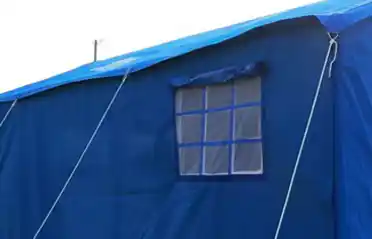
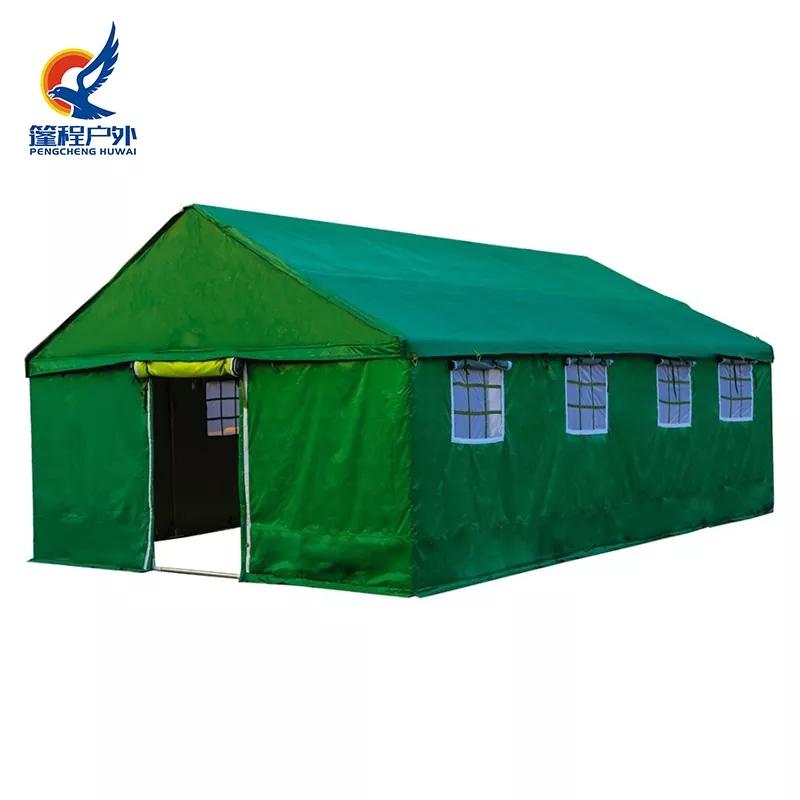
Fig. 1 Blue coated outer shell with pitched gable roof, grid window with roll-up flap and fixed guy ropes.

The exterior shown in Fig. 1 uses a dense blue coated fabric that sheds rain rather than absorbing it. Coating treatment lowers water penetration, while the stitched edges are bound with matching blue tape so rain cannot follow the seam thread into the cabin. The pitched gable roof gives runoff a clear slope instead of pooling on a flat top. Buyers should ask the supplier for fabric weight per square meter and the water-pressure rating, because the same blue color can hide very different coating quality.

Quilted Cotton Inner Layer Keeps the Cabin Warm Without Power

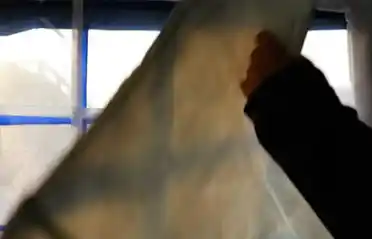
Fig. 2 Quilted cotton wadding lining held to the light; fixed stitching prevents padding shift.

Fig. 2 shows the inner wadding layer held up to the light. The quilted stitching locks cotton padding in place so it does not shift after repeated setup and folding. Air trapped between the wadding fibers acts as insulation, raising cabin temperature overnight when no heater is available. In cold-weather deployments this layer reduces condensation against the skin and keeps bedding dry, which is why relief agencies specify lined models instead of single-layer camping fabric.

Transparent Window Panels Bring Daylight, Ventilation and Privacy

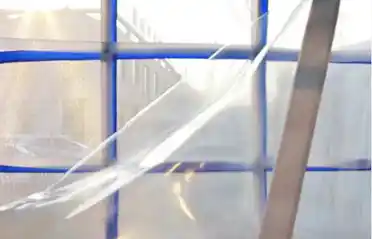
Fig. 3 Transparent PVC window panel with blue bound frame used on the side walls.

Fig. 3 shows the transparent panel material used for side windows. Clear film transmits daylight without opening the door, while the grid-style windows on the exterior combine mesh screening for airflow with a roll-up fabric flap for privacy and storm protection. This dual design means occupants can keep windows closed during rain and still refresh air when the weather clears.

Spacious Gable Interior and Guy Ropes Handle Crowds and Wind

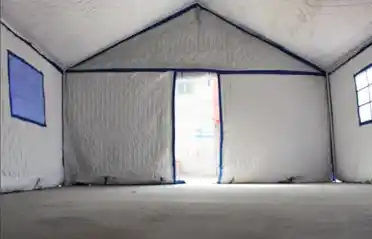
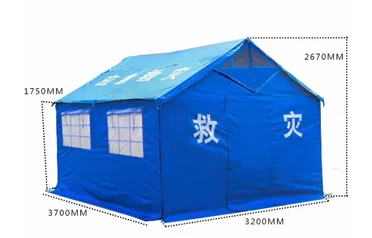
Fig. 4 Open gable cabin with clear floor area, double door and blue-trimmed side windows.

Inside, Fig. 4 shows an open gable cabin with a clear floor area, blue-trimmed windows on both sides and a wide double door that lets stretchers or cargo pass through. The sloped ceiling removes the low side-wall headroom that cramps family-sized groups. Outside, diagonal guy ropes fixed to the shell carry wind force down to ground pegs, preventing billowing and lifting during gusts. Buyers should confirm rope thickness, peg length and anchor points in the specification sheet.

Manufacturer Backing: Verified Quality Control Behind Every Shelter

Tangshan Pengcheng Outdoor Products Co., Ltd. was established in 2014 in Tangshan, Hebei Province, and specializes in R&D and manufacturing of tents, tarpaulins, thermal blankets and sleeping bags. The company operates five production and warehousing bases across Shenyang, Xi'an, Linyi, Yishui and Langfang, with over 300 employees and a production and research base of more than 15,000 square meters. Daily output reaches 3,000 to 5,000 tents, and a professional transport team can load 60 high-cube containers per day. Certified under ISO 9001 quality management and ISO 14001 environmental management, recognized as a National High-Tech Enterprise, the company holds more than 30 utility-model and design patents and 12 independent brands, with exports to Southeast Asia, Africa and the Middle East. Every disaster relief tent leaving these bases follows the same incoming-material check, sewing inspection and finished-load test before shipment.


FAQ: Answers Buyers Usually Ask Before Ordering

Q: Can size, color and logo be customized?

A: Yes. Dimensions, fabric color and printed logos can be adjusted for agency and bulk orders; send your required layout for a confirmed quotation.

Q: How quickly can a bulk order be delivered?

A: Standard models are kept in ready stock. Combined with daily production capacity, urgent orders are shipped in priority sequence, and the exact lead time is stated with the quote.

Q: Are spare parts available after delivery?

A: Yes. Steel frames, replacement fabric, ground pegs and guy ropes can be purchased separately for on-site maintenance.

Whether your team prepares a procurement tender or a pilot order, compare the shell, lining, window and rope details above before choosing. Request a catalog and quote for your disaster relief tent order from Tangshan Pengcheng Outdoor Products Co., Ltd., and receive fabric samples, specification sheets and delivery terms within one business day.


Related News
Leave me a message
X
We use cookies to offer you a better browsing experience, analyze site traffic and personalize content. By using this site, you agree to our use of cookies. Privacy Policy
RejectAccept