News

What fabric should be chosen for outdoor disaster relief tents to withstand various types of harsh weather?

2026-07-24 0 Leave me a message

In harsh climatic conditions—such as extreme rainfall, heavy snowfall, severe typhoons, freezing temperatures, and intense midsummer heat—disaster relief tents must withstand prolonged exposure to the elements. The material of the tent fabric directly determines overall performance regarding wind and rain resistance, tolerance to temperature extremes, and durability against aging. Emergency reserve agencies, charitable rescue organizations, and overseas buyers frequently inquire about the best fabric choices for tents designed to handle adverse weather across diverse regions. Drawing on years of experience in custom tent manufacturing and adhering to both domestic industry standards for disaster relief supplies and international export testing protocols, Tangshan Pengcheng Outdoor Co., Ltd. has categorized and compared mainstream disaster relief tent fabrics to help buyers select the right models based on specific regional needs.


I. Standard Material for National Emergency Stockpiles: PVC-Coated Polyester Fabric (Double-Sided)

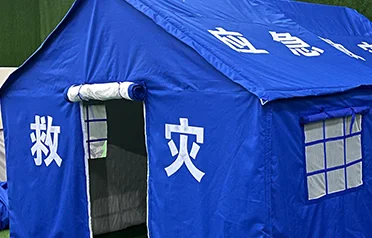
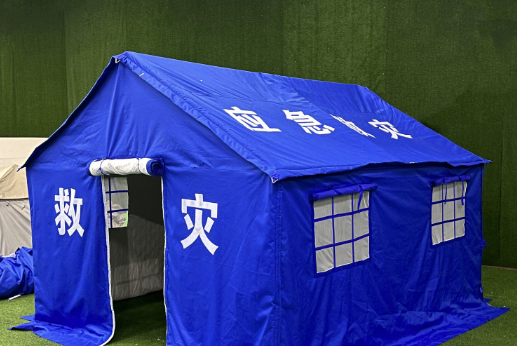
This fabric is the standard primary material for government-procured disaster relief tents in China, widely used in the 12m² standard emergency shelter tent. Its production strictly adheres to the industry standard MZ/T 011.2-2010 for disaster relief tents.

The fabric features a high-elasticity polyester base with a double-sided PVC coating that is both waterproof and flame-retardant. It boasts a dense, compact structure and an operating temperature range of -45°C to +65°C; it remains flexible and resistant to cracking in extreme cold, while resisting delamination and aging under intense heat and sun exposure. With a hydrostatic pressure resistance exceeding 50kPa, the fabric prevents leakage even during prolonged heavy rain. An added UV-resistant coating ensures slow rates of fading and embrittlement during long-term outdoor exposure. The overall structure withstands Force 7–8 winds and maintains stability under the load of accumulated rain or snow.

Tangshan Pengcheng Outdoor utilizes this fabric for its standard disaster relief tents when fulfilling orders for flood control and geological disaster relief stockpiles. Seams are sealed with waterproof heat-sealing tape to block needle holes and eliminate leakage risks, making the tents suitable for the vast majority of disaster relief scenarios, ranging from rainy and snowy inland regions to humid, typhoon-prone coastal areas.


II. Versatile Export-Grade Fabric: Thickened PU-Coated 600D Oxford Cloth

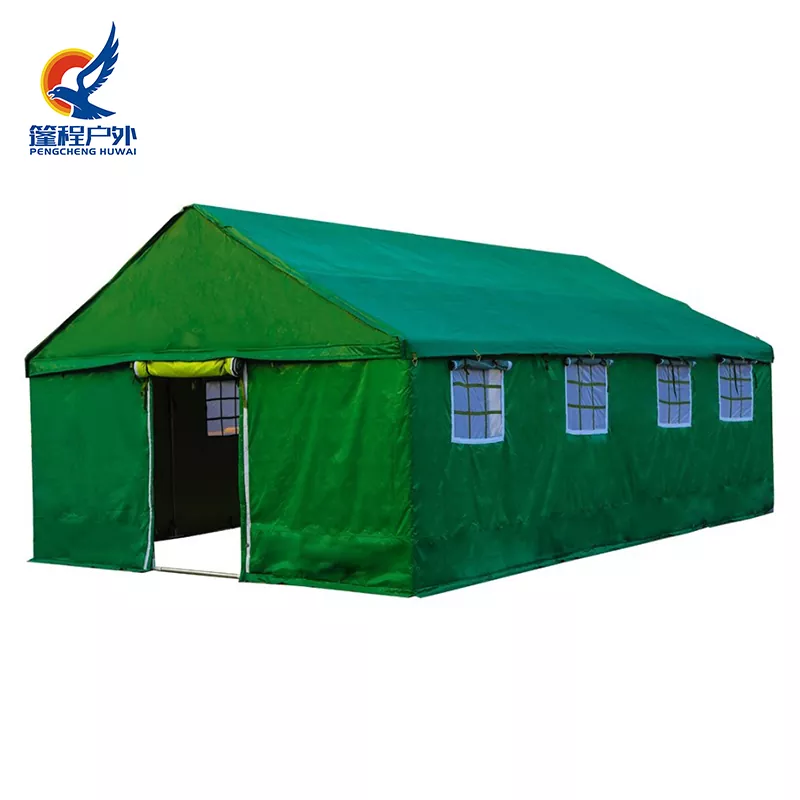
This fabric combines high-density 600D Oxford cloth with a thickened, waterproof PU coating, striking a balance between lightweight portability and durability. It is widely used for the mass export of simple disaster relief tents and temporary medical inspection tents.

The fabric is lighter than PVC-coated alternatives and folds into a more compact size, facilitating long-distance, cross-regional transport and deployment. Its UV-resistant surface coating blocks intense direct sunlight, making it suitable for use in arid, scorching desert environments. With a waterproof rating exceeding 3000mm, it effectively prevents moisture penetration during brief downpours and routine rainy weather. Compared to PVC fabrics, Oxford cloth offers superior breathability, preventing moisture buildup inside the tent and mitigating issues with dampness and mold common during the rainy seasons of southern regions. Manufacturers frequently recommend this fabric for disaster relief tents destined for the hot, rainy climates of Southeast Asia and Africa.


III. Specialized Fabric for High-Altitude, Cold, and Snowy Regions: Quilted Composite Fabric with Triple-Protection Properties

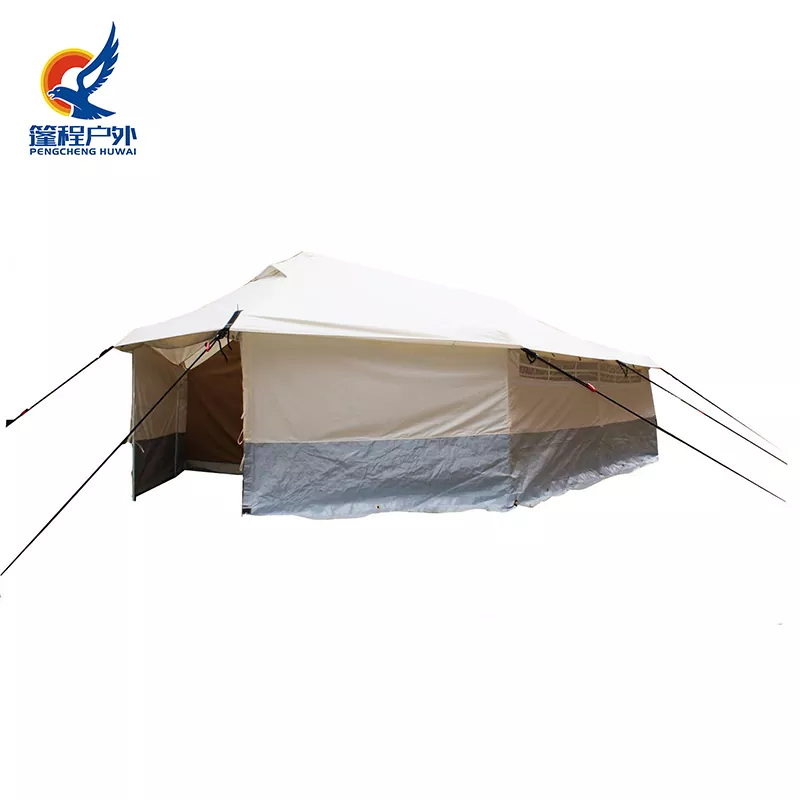
Designed for scenarios such as snowfall on plateaus and post-disaster resettlement in northern regions during winter, the three-layer composite tarpaulin is specifically engineered for low-temperature environments. It consists of an outer windproof and waterproof layer, a middle layer of polyester thermal insulation felt, and an inner layer of skin-friendly, breathable lining.

Beyond basic rain and wind resistance, the insulating interlayer blocks the cold, ensuring a more stable temperature inside the tent at night. The robust outer structure supports the weight of accumulated snow, making it suitable for winter blizzard relief and resettlement operations. Tangshan Pengcheng Outdoor can flexibly adjust the thickness of the insulation layer based on the average temperature of the deployment area, tailoring these cold-resistant disaster relief tents to meet the needs of long-term stays in various high-altitude, cold zones.

IV. Key Considerations for Selecting Fabrics for Harsh Environments

For disaster relief tents intended for long-term outdoor use, it is essential to verify three fundamental performance indicators: tear strength, flame retardancy, and low-temperature resistance.

In coastal areas exposed to strong sea winds and salt spray, fabrics require anti-salt-corrosion treatment to mitigate degradation caused by the marine environment.

For large-scale export orders, fabrics can be matched to EU safety standards for outdoor textiles to ensure compliance with cross-border delivery requirements.

As a local enterprise specializing in the production of outdoor emergency tents, Tangshan Pengcheng Outdoor Co., Ltd. customizes disaster relief tents with fabrics tailored to the specific climatic conditions of the client's project location. We meet diverse environmental needs and fulfill orders for both domestic emergency stockpile procurement and global humanitarian aid supplies.


Related News
Leave me a message
X
We use cookies to offer you a better browsing experience, analyze site traffic and personalize content. By using this site, you agree to our use of cookies.Privacy Policy
RejectAccept